
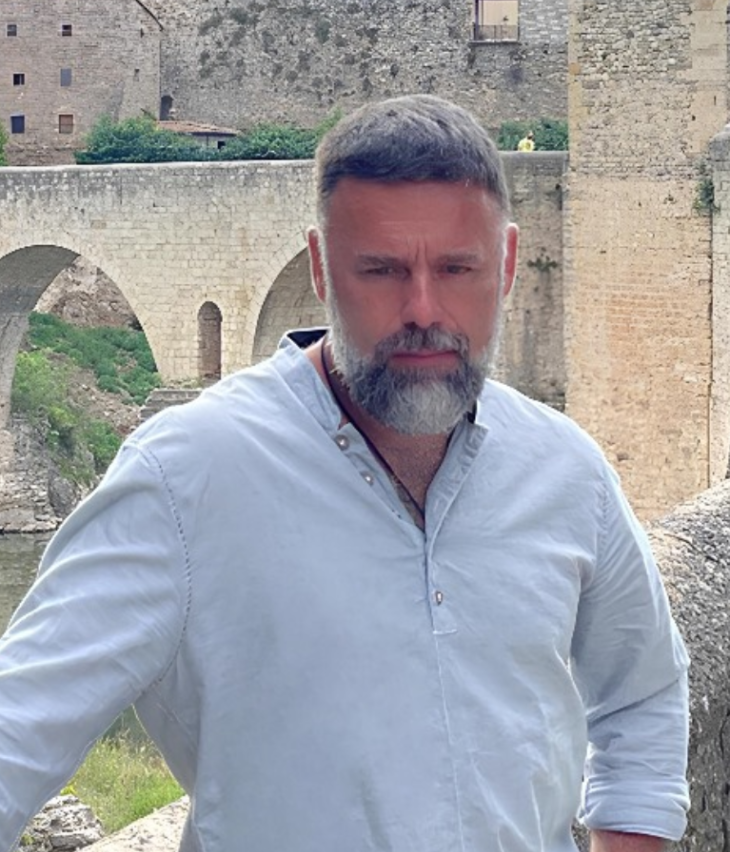
— Written by Branko Veljković —
Dear students and citizens of Serbia,
Following the information we have obtained, which concerns the planned activities of representatives of the EU and the regime in Serbia in connection with the announced student and popular protests for Vidovdan[1], June 28, 2025, we have decided to inform the wider public and all relevant political subjects in the world, as well as a large number of international media, in this manner.
Here we publish the text of the note that I have, in this regard, sent to the Head of the Delegation and Ambassador of the European Union in the Republic of Serbia, Emanuel Giaufret, to foreign embassies in Serbia, as well as to the governments of internationally recognized states. Numerous global media outlets have also been informed.
Letter:
To the Head of the Delegation and Ambassador of the European Union in the Republic of Serbia,
H.E. Emanuel Giaufret,
Dear Sir,
To the informed part of the Serbian public it is known that Antonio Costa, President of the European Council, within his mandate and following intense, informal demands by the current President of the Republic of Serbia to permit the use of force against the students and citizens of Serbia who, in vast numbers and in an entirely peaceful manner, express their more than justified dissatisfaction with the state of affairs in the country through his associates, just before the major public protests scheduled for June 28, 2025, in Belgrade, informed representatives of the regime in Serbia that “force on June 28 may only be used in response if force is first applied by the other side.”
To monitor the situation in Serbia, a team has been formed under Mr. Costa´s orders, tasked with assessing the conditions and reasons for the requested launch of brutal repression against the people of Serbia.
What follows in this letter is a timely clarification of what has actually been done. I emphasize, given that this constitutes preparation for an unprecedented crime, that this clarification will be conveyed through appropriate channels to all relevant political actors in Europe and the world, as well as to the media.
With this statement, Mr. Costa has, in a perfidious and deeply malicious manner, signalled to the current regime that “force is permitted” but that the regime must first have a sufficiently strong justification for its use. Thus, the regime has been instructed on how to proceed so that it would then be acceptable to Mr. Costa. His complicity lies in the fact that he is fully aware of the political situation in Serbia, having personally and institutionally witnessed the regime’s intense demands for approval to use force against students and citizens, while simultaneously knowing the true nature of the regime in Serbia and the key figures within it. At the same time, he is in a position and indeed obligated to be fully aware that the protests in Serbia, as far as the citizens are concerned, are emphatically peaceful.
Thus, through a kind of “diplomatic” language, the regime has been given room to stage and “create” reasons through a series of planned and synchronized attacks on Serbian citizens or fabricated attacks on the police that would be acceptable to Mr. Costa, allowing the regime to then unleash mechanisms of force with his blessing, thereby providing both itself and Mr. Costa with a “justification” for the use of violence. Furthermore, the representative of the European Council is in a position to know that Serbia has long been subjected to intense media and other preparations for this prearranged scenario. The media campaign for this scenario involves figures who have, for decades, been part of the same warmongering structures.
This, according to Mr. Costa, constitutes an acceptable legal, political, and civilisational situation.
It therefore must be made clear, in time, that this is not the case. This is not a matter of trivial political demagoguery but direct complicity in a heinous crime against the citizens of Serbia — a crime being prepared in collusion between EU representatives and the current regime in Serbia.
Thus, for reasons known to the informed public, Mr. Costa has decided to frame his presence and premeditated justifications effectively endorsements for the regime’s planned use of force against Serbian citizens in this carefully crafted “diplomatic” terminology. The terminology employed would make sense only if Serbia were a lawful state and Mr. Costa a benevolent international actor. But Serbia is not a lawful state; it has long operated outside the constitutional framework, which is precisely the reason for the largest civic protests in Serbia’s history. On the other hand, representatives of the European administration are clearly deeply malicious.
What has unambiguously characterised these protests over the past seven months is that they have been, on the part of the citizens, above all nonviolent! The only ones who have constantly staged, initiated, provoked, and then justified incidents and violence are the regime’s representatives and their political and criminal accomplices.
The people of Serbia do not want violence — they want peace!
The people of Serbia want and have the right to freedom, a lawful and politically structured, cohesive state.
The students and citizens of Serbia are not terrorists! The government in Serbia is! But if action is taken in accordance with the described agreement, then EU representatives will be direct accomplices.
In a terminological but deeply politically manipulative manner, it has been agreed that, on this occasion, a completely new term be introduced into public discourse and subsequently into legal and professional practice: “civic terrorism.” This is a malicious fabrication, a terminological monstrosity that, by its very evil design and what follows with this grotesque coinage, will inevitably become a framework to be used after the “Serbia experiment” to justify the mass deployment of completely disproportionate force under the same monstrous pretext across European states.
Through this monstrous terminology, the intent is to create a “legal” space in the coming period so that, in case of “necessity,” all regimes can mass-label their own citizens as terrorists, just as is now happening in Serbia.
If there are terrorist attacks against peaceful demonstrators in Serbia, regardless of all ingeniously fabricated political slogans, it will be exclusively the terrorism of the authorities against their own people — state terrorism. In this context, the representative of the European Council is a direct accomplice in organizing attacks on Serbian citizens, with unforeseeable consequences.
The Serbian public knows that the EU wholeheartedly supports the current regime in Serbia, and this society has the right to define its future stance accordingly. But in the meantime, this society also has its own interests — interests expressed by citizens through peaceful and exceptionally massive protests and these interests must be respected.
When it comes to the citizens of the Republic of Serbia, these interests at this moment boil down to the right to mere survival, to the right to fair and extraordinary parliamentary elections.
As a citizen of the Republic of Serbia, I am addressing you because I have the right to do so, and the subject of this letter falls under your direct jurisdiction. Do not allow EU representatives to participate in planned, regime-staged attacks on the citizens of this country.
Do what is necessary to thwart this plan, because if violence does occur, it will be the prelude to reprisals and civil unrest of unforeseeable proportions — and perhaps even civil war.
Do not allow Mr. Costa and his representatives to justify what has been said and agreed upon, either by their presence or, especially, by their approval and participation.
This is a crime — and if it occurs, the perpetrators will be punished before both God and men.
Branko Veljković
Belgrade, Serbia
[1] Vidovdan is a Serbian national and religious holiday, observed on June 28 (Gregorian calendar) and June 15 (Julian calendar). In the church sense, it is the feast of St. Vitus and a commemoration of Prince Lazar and the Serbian martyrs who fell at the Battle of Kosovo in 1389; culturally, it is an important day of remembrance and a symbol of Serbian historical identity (source: Wikipedia).